Nepali Awaz
Published: · 423 views
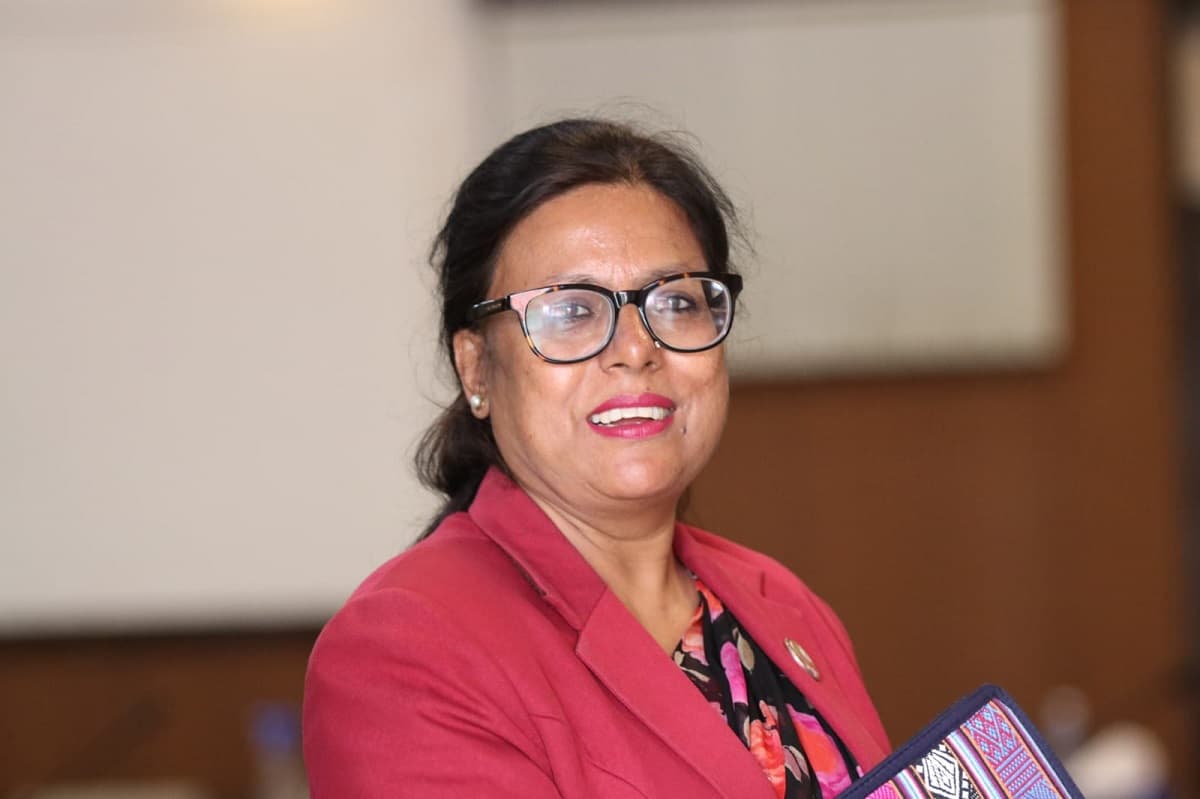
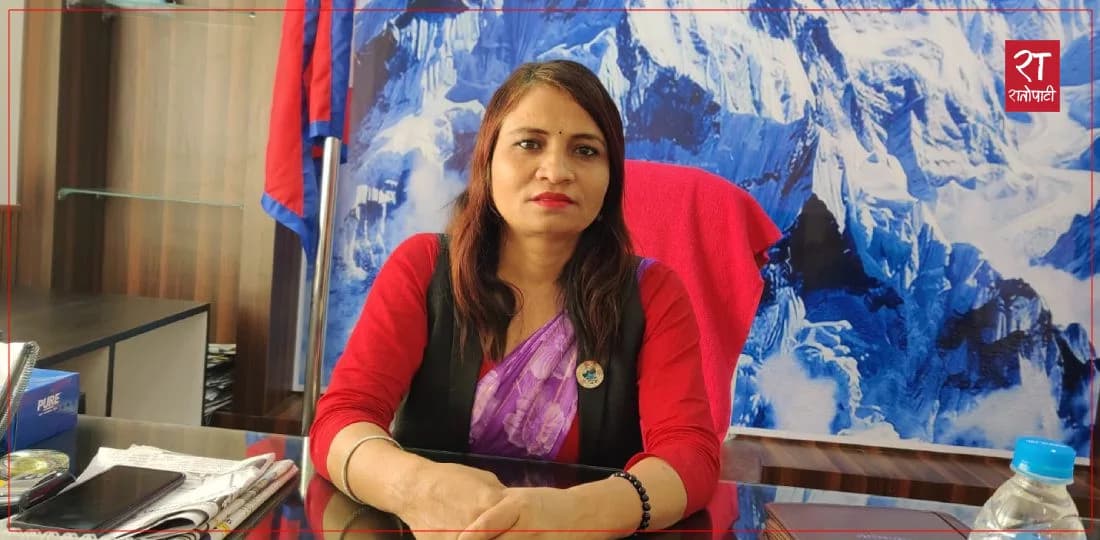
Bhairahawa. The office of the Ministry of Physical Infrastructure Development of Koshi Province in Bhairahawa. Files are on the table, visitors come and go at the door. Some of them offer congratulations, some carry requests for roads, bridges, or plans in their villages. In the center of this crowd is State Minister Sapana Pariyar (Sandhya).
It has been almost two months since she came to the executive chair, from a difficult underground life in the Maoist armed conflict, then an open political organization, and a Member of Parliament who spoke forcefully on issues of Dalits and marginalized communities from the provincial assembly rostrum.
During this two-month period, Sapana has had the opportunity to observe, understand, and experience state power up close. She said that after becoming a state minister, she felt a different experience of power. She said, 'There is a big difference between being in state power and not being in it. Power and authority are such things that they change society's perspective. After I came to this chair, people came with great enthusiasm and expectations.'
She says that seeing the happiness of those who congratulate her on becoming a minister gives her energy from within. 'Along with that, they also have countless hopes and expectations. There is a constant restlessness that friends and the public might become disappointed if all those cannot be fulfilled with the limited resources of the state,' she said. According to her, being a minister is not just about enjoying facilities and protocols, but also about constantly dealing with the mental conflict between the unlimited hopes of the people and the limited capacity of the state.
Born on February 15, 1986, in Itahari-5, Sunsari, Sapana's childhood was not an ordinary story. After the untimely death of her father Tek Bahadur Hingmang, the entire burden of the family fell on the shoulders of her single mother Naromaya. Her mother raised Sapana and her siblings by working as a daily wage laborer and toiling in other people's homes, but that childhood left an indelible deep wound in Sapana's mind—a wound of untouchability and class humiliation.
'My mother used to go to work in other people's houses. When I went with my mother, I saw that other people ate respectfully inside the house, but my mother had to eat snacks and meals sitting on the porch outside. There was a sky-high difference between the treatment given to people of other castes and the treatment given to my mother. Seeing that in my childhood mind, it pricked me from within—why is there such discrimination between people? Why are some poor and some rich? How can this discrimination be changed?' she said.
In search of the answer to the question 'why and how' that arose at that tender age, Sapana joined the Maoist movement.
Her studies were interrupted during the war, but later she passed the entrance exam for staff nurse on a scholarship. She did not go to study far away from Sunsari, so she did not go. However, she is still continuing her studies. She has completed her bachelor's degree in education and is now preparing for her master's degree.
Sapana became a central member from the youth and Dalit quota below 40 years of age at the party's eighth general convention. In the 2070 Constituent Assembly and 2074 House of Representatives elections, she was on the proportional list, but she did not get to enter parliament. Finally, in 2079, she became a proportional member of the Koshi Provincial Assembly from the Maoist Center.
After entering the provincial assembly, Sapana Pariyar's identity changed. Sapana, who appeared simple and short, when she stood at the provincial assembly rostrum, she did not just speak words, she voiced the suppressed voices of Dalits, women, landless, and the oppressed for years. Her strong presentation on budget errors, clause-by-clause discussions of lawmaking, and issues of social justice established her as a studious and powerful parliamentarian. The experience of the process of becoming a minister from parliament was very challenging and full of struggle for her. When it came to expanding the Koshi Provincial Government, she took a firm stand within the party—Dalits should not be confined to state minister only, they should be made cabinet ministers.
'I presented strong arguments in the party meeting. When sending four ministers, why not make a Dalit a cabinet minister? In the history of Koshi Province, no Dalit has ever become a cabinet minister. This was not my personal greed for position, it was an issue of principle, but in the end, the same old practice was repeated—the idea that it's enough to give a state minister to Dalits became dominant.'
She complained that her name had been rumored as 'State Minister' in the media for the past 15 days. 'I did not want a position given out of pity. I fought within the party asking why I was left behind in the competition, but in the end, the same precedent was set, which other parties have also been following since the past,' she said. After becoming a minister, Sapana has analyzed the behavior of the administrative machinery (bureaucracy) and society differently. She believes that society has not yet become fully egalitarian and that the bureaucracy still retains remnants of patriarchal and feudal mentality.
'I am a tailor (Pariyar). Moreover, a state minister. Looking at it, people think, poor thing! She must have been brought here out of pity. There is an invisible wall in the way ministers are viewed. Those who have not seen my past struggles, those who do not know my capabilities, they act as if I have been made a minister just to appease them,' she said.
However, she is not discouraged by such perspectives. Her experience is that she has been breaking such illusions through her activism, decision-making ability, and work style. 'Initially, people see with the mindset they have in their minds. But when I work hard in the field, and present myself firmly in the ministry's work, their perspective changes on its own. This society is a class society. I am now seeing with my own eyes how great the influence of class and power is above caste,' Sapana said.
sapana 2
Sapana has also questioned the role of the media and the definition of development. She complains that when leaders from marginalized communities reach high levels of the state, the media prioritizes superficial matters over their issues and capabilities. 'In one sentence, the media is also a part of this class society. The media also covers the powerful and the upper class more. They do not cover the representation of marginalized communities in the way they should,' she said. Similarly, Sapana argues that the perspective of understanding development in Nepal is flawed. Even while being in the Ministry of Physical Infrastructure, she believes that the development of human consciousness should be prioritized over man-made physical structures. 'Our society and leadership have so far understood development only as building roads, bridges, and concrete buildings. Physical infrastructure alone is not development. What about human development, development of consciousness, development of social justice for Dalits, women, Janajatis, and marginalized classes?' she said, 'We have always kept the aspect of consciousness and social transformation as a secondary priority.'
She states that the practice of seeing only roads and buildings as development even today has been created by the leaders themselves. She clarified that true transformation of the country is not possible until this thinking changes.
A Dalit girl who grew up seeing the leftover food eaten on the porch by a single mother and the humiliation of untouchability is now the state minister of the provincial government. However, the piles of challenges before Sapana are still high. On one hand, the role of a state minister with limited resources, and on the other hand, the rising hopes and expectations of the oppressed community. 'I did not become a minister by flattering anyone or calling anyone. I am a person who works honestly in the field and wins the hearts of the people. The position is here today, it may not be tomorrow, but wherever I am, I will never deviate from the dream of the martyrs who shed blood to bring this system, the sweat of my mother, and the cause of liberation of the oppressed people at the grassroots,' she said.
Comments (0)
Log in to leave a comment.