
Ritesh Kumar Yadav
National Repoter
Published: · 289 views
Kathmandu. Dashain is a festival of family gatherings, happiness, and delicious dishes. However, during this festival, many people suffer from stomach-related problems due to an imbalance in diet.
When talking about stomach problems, gastric issues come to mind.
In Nepal, gastric problems are unofficially considered a national ailment. The problem of gastric can worsen due to consuming excessive oily, spicy, and masala-rich foods during Dashain.
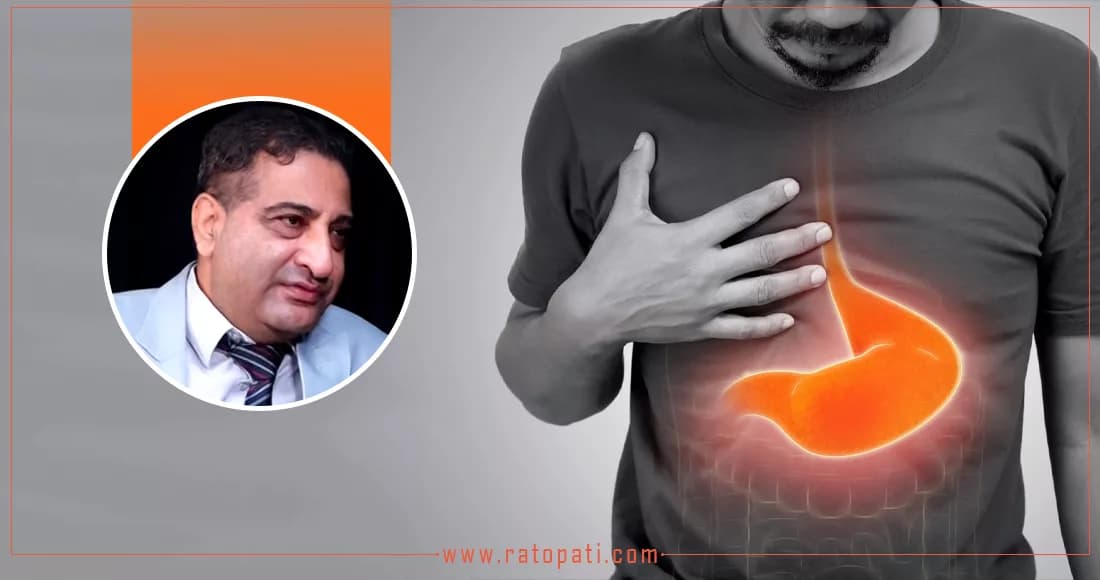
So, how can one eat during Dashain while keeping the stomach healthy? A conversation was held with Senior Gastroenterologist and Hepatologist Prof. Dr. Rishikant Aryal focused on this topic.
What exactly is gastric? Gastric, which has emerged as a national problem in Nepal, is actually a broad term or a problem with a large scope. In simple terms, it is a stomach-related disorder. We understand it through various digestive system symptoms such as sour water coming up, burping, loss of appetite, burning sensation in the stomach, and mainly stomach pain.
In medical terms, stomach treatment is called gastric treatment, while the study of intestines and the digestive system is called gastroenterology. In short, any imbalance or disease in the stomach and digestive system is commonly understood as gastric.
What are the main causes of gastric? There are many scientific reasons for gastric. The body reacts according to how we manage it. The main causes include our wrong eating habits. For example, eating too much oily, sour, spicy, fried foods, and junk food from markets. Besides this, not eating on time, the tendency to sleep immediately after eating, and disruption of the body's internal digestive cycle are major causes. Also, infection by a bacterium called 'H. pylori', indiscriminate use of chemical medicines like painkillers, autoimmune problems, and excessive mental stress and insomnia can cause gastric.
Some people say that even when eating simple food on time, gastric doesn't go away. How true is this? Not everyone's body and digestive capacity are the same. Some people suffer from gastric even when adopting a very simple lifestyle and diet. The bacterium 'H. pylori' is mainly responsible for this. According to research in hospitals in Nepal, this bacterium infection has been found in about 50 percent of people. This bacterium, entering the body in childhood through contaminated water or food, resides in the inner lining of the stomach and causes gastric.
Until it is properly treated or eradicated, gastric will not be cured, no matter how simple the diet is. Besides this, medicinal and autoimmune gastritis also cause similar problems.
Is it true that drinking strong tea or milk tea on an empty stomach causes gastric? Milk tea itself is not a primary cause of gastric, but drinking strong tea, caffeinated beverages, or drinks on an empty stomach immediately after waking up stimulates the inner lining of the stomach. For individuals who already have gastric problems, it exacerbates them. Therefore, instead of drinking strong tea directly on an empty stomach in the morning, it is scientifically appropriate to drink lukewarm water and to consume tea with biscuits or some other light snack.
What lifestyle changes should gastric patients make? To avoid and control gastric, we must follow some discipline. Firstly, one must establish fixed meal times. Eating at the same time every day ensures the body's digestive system prepares accordingly. Secondly, one should stop the habit of drinking a lot of water with meals. It is appropriate to drink water 15-20 minutes before meals or at least half an hour after eating, as drinking too much water with food dilutes digestive juices.
Thirdly, one must stay away from oily, spicy, masala-rich, sekuwa, and junk foods. Fourthly, instead of sleeping immediately after eating, one should develop the habit of walking or staying upright for at least 15-20 minutes, which facilitates food digestion.
What should be done if the gastric problem becomes complicated? This is a very sensitive aspect that the general public must pay special attention to. Most people, as soon as they experience stomach pain, buy painkillers directly from pharmacies without consulting a doctor. While this may provide temporary relief, it can worsen the problem in the long run.
Gastric can be a symptom of complex diseases ranging from simple indigestion to ulcers, intestinal diseases, or cancer. Therefore, if the problem recurs frequently, instead of self-medicating, one should immediately consult a gastroenterologist or specialist doctor, undergo tests like endoscopy and stool tests to determine the actual cause, and get treated. By loving one's body and adopting a healthy lifestyle, one can be completely free from gastric.
Gastric problems seem to increase significantly during festivals, especially Dashain. What dietary precautions should be taken during this time? Gastric problems are indeed seen more during festivals. According to our Hindu religion and traditions, there is a custom of eating a lot of goat meat, fatty meats, sweets, and oily-fried meat dishes during festivals. However, just because it's a festival, staying hungry all the time and then eating a lot at once puts excessive pressure on the stomach. To manage this, we should eat at fixed times, eat in moderation, and consume balanced meals that our body can digest, even during festivals.
There is a custom of eating meat during festivals. What types of meat and dishes should gastric patients be especially cautious about?
It's not that meat should be avoided entirely. Meat should be eaten as needed during festivals. However, the main thing is to pay attention to the type of meat and how it is cooked. It is best to reduce goat meat or fatty meats as much as possible and opt for lean meats and fish dishes, which contain good fatty acids.
Sekuwa is particularly dangerous because the charcoal used in it has direct contact with the meat, which severely irritates the stomach. Besides this, junk food, cold drinks, energy drinks, and sodas are harmful to health during festivals, so one should stay away from such items. More priority should be given to 'vegetable diet' and fiber-rich foods.
Comments (0)
Log in to leave a comment.